

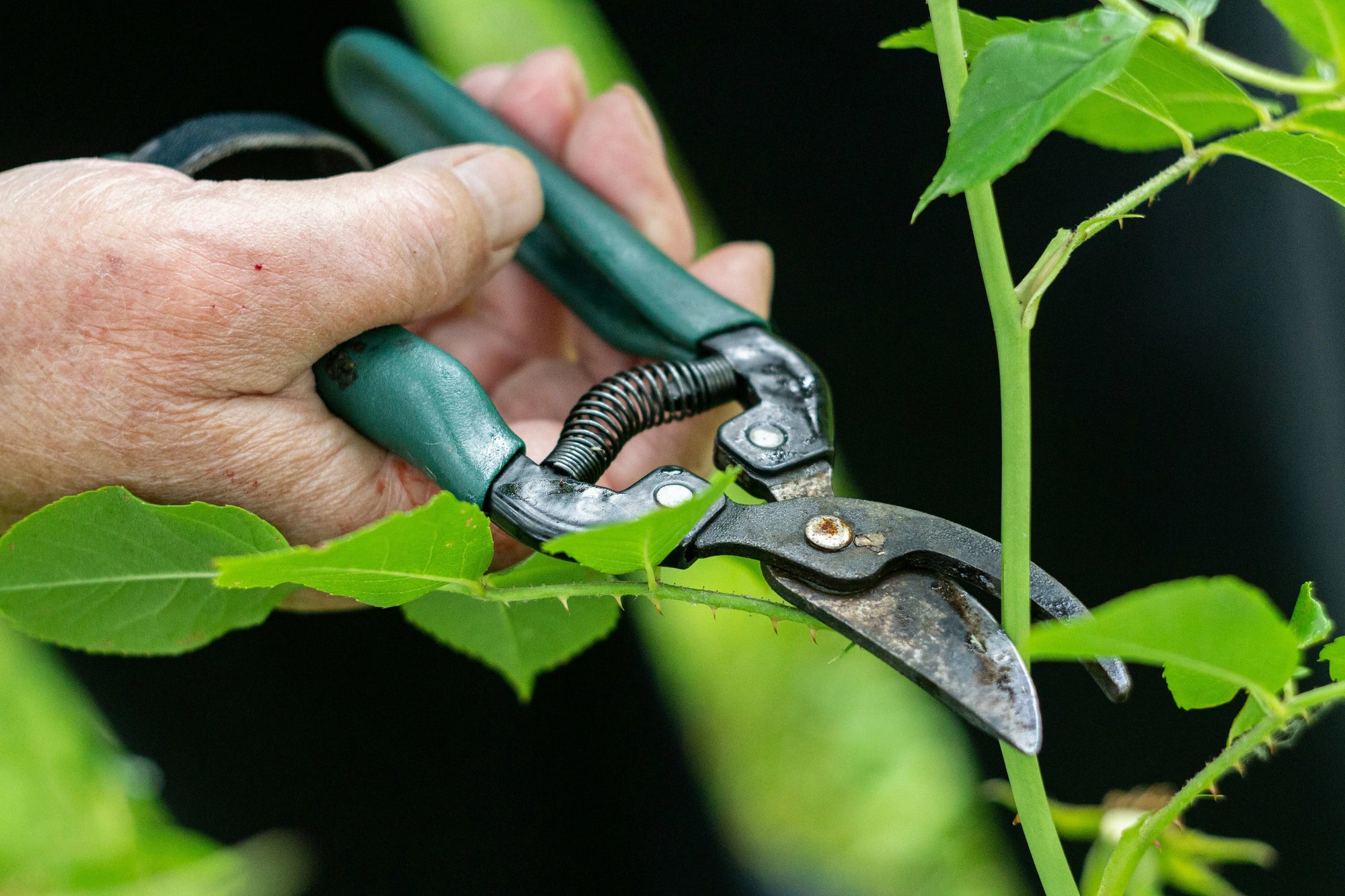
Choisir les bons outils de taille pour vos plantes d'intérieur est plus qu'une simple question de commodité ; c'est une étape cruciale pour maintenir la santé des plantes et encourager la nouvelle croissance. Utiliser le mauvais outil peut écraser les tissus vivants, entraînant des blessures irrégulières qui invitent les maladies.
Que vous gériez un bonsaï délicat ou un figuier lyre tentaculaire, ce guide vous aidera à choisir les instruments précis nécessaires pour votre jungle intérieure.
1. Identifiez vos objectifs de taille
Avant d'acheter, observez vos plantes pour déterminer le type de coupes que vous ferez :
-
Élimination des fleurs fanées et détails fins : Retirer les fleurs fanées ou façonner de petites succulentes.
-
Entretien : Couper les tiges fines et chétives pour encourager une croissance plus touffue.
-
Taille sévère : Couper des tiges épaisses et ligneuses sur des arbres d'intérieur comme les Ficus elastica ou les Monsteras.
2. Types d'outils essentiels pour les plantes d'intérieur
La plupart des jardiniers d'intérieur peuvent satisfaire 90 % de leurs besoins avec une paire de sécateurs à lames croisantes et des ciseaux de précision.
Sécateurs à lames croisantes (le standard)
Les sécateurs à lames croisantes fonctionnent comme des ciseaux, où deux lames courbes se "croisent" pour créer une coupe nette et chirurgicale.
-
Idéal pour : Les tiges vertes vivantes et le bois souple.
-
Pourquoi : La coupe nette permet à la plante de cicatriser rapidement sans ecchymoses.
-
Meilleur choix : Le Felco 2 est largement considéré comme la référence en matière de robustesse et de pièces remplaçables.

Crédit photo : Felco Swiss Made
Ciseaux de précision (l'expert du détail)
Ces outils ressemblent à de longs et fins ciseaux et sont conçus pour les travaux délicats dans les espaces restreints où les sécateurs encombrants ne peuvent pas atteindre.
-
Idéal pour : Cueillir des herbes aromatiques, façonner des bonsaïs et tailler des plantes à feuilles fines.
-
Meilleur choix : Les ciseaux à micro-pointe Fiskars sont très appréciés pour leur confort et leur précision.

Crédit photo : Fiskars
Sécateurs à enclume (l'option robuste)
Les sécateurs à enclume ont une seule lame tranchante qui se ferme contre une plaque métallique plate (l'"enclume").
-
Idéal pour : Retirer le bois vieux, sec et mort.
-
Attention : Évitez de les utiliser sur des tiges vivantes, car l'action d'écrasement peut endommager les tissus sains.
-
Meilleur choix : Sécateur à enclume à action douce Fiskars.

Crédit photo : Fiskars
Sécateurs à crémaillère (pour le soutien de la main)
Si vous avez une grande collection d'intérieur ou si vous souffrez de fatigue de la main ou d'arthrite, les sécateurs à crémaillère sont inestimables.
-
Comment ils fonctionnent : Ils coupent par étapes, multipliant la force de votre main.
-
Meilleur choix : Les sécateurs à crémaillère The Gardener’s Friend sont très appréciés des jardiniers seniors.

Crédit photo : The Gardener's Friend
3. Principales caractéristiques à rechercher
Lorsque vous comparez des marques comme Fiskars, Felco et Corona, gardez à l'esprit ces spécifications techniques :
-
Matériau de la lame : Recherchez de l'acier à haute teneur en carbone ou des revêtements en titane pour une netteté durable et une résistance à la corrosion.
-
Ergonomie : Choisissez toujours des outils avec des poignées antidérapantes et rembourrées pour réduire la tension du poignet pendant les longues séances.
-
Verrou de sécurité : Assurez-vous que l'outil dispose d'un mécanisme de verrouillage fiable pour maintenir les lames fermées lorsqu'il est rangé.
-
Pièces de rechange : Les marques de haute qualité comme Felco vous permettent de remplacer des ressorts ou des lames individuels plutôt que d'acheter un nouvel outil complet.
4. Entretien : Garder vos outils aiguisés et sécurisés
Même les meilleurs outils tomberont en panne, et potentiellement nuire à vos plantes, s'ils ne sont pas entretenus.
-
Désinfecter entre les plantes : Essuyez les lames avec de l'alcool isopropylique à 70 % avant de passer à une nouvelle plante pour éviter la propagation des agents pathogènes.
-
Nettoyage régulier : Retirez la sève et la "gomme" avec de l'eau chaude savonneuse ou du WD-40 pour éviter que les lames ne collent.
-
Aiguiser souvent : Utilisez une pierre à aiguiser ou une lime fine pour des coupes nettes. Les lames émoussées déchirent les tiges, rendant vos plantes vulnérables aux infections.
Conseil de pro : Si vous gérez de massifs spécimens d'intérieur comme un Ficus lyre de 1,80 m, envisagez une petite paire de sécateurs de force de Corona pour un effet de levier supplémentaire sur ces branches ressemblant à des troncs.

En résumé, choisir les meilleurs outils de taille pour vos plantes d'intérieur est un investissement à la fois dans votre collection de plantes et dans votre propre expérience de jardinage. En choisissant des sécateurs à lames croisantes de haute qualité pour des coupes nettes sur les tiges vivantes et des ciseaux de précision pour les travaux de détail délicats, vous vous assurez que votre jungle intérieure reste saine et éclatante.
N'oubliez pas que le meilleur outil n'est bon que s'il est bien entretenu. Garder vos lames affûtées et désinfectées prolonge non seulement la durée de vie de votre équipement, mais protège également vos plantes du stress inutile et des maladies. Au fur et à mesure que votre jardin intérieur grandit, votre boîte à outils peut évoluer, mais commencer par ces bases essentielles et performantes vous mettra sur la voie d'un soin expert des plantes.
Points clés à retenir pour votre kit de taille :
-
Sécateurs à lames croisantes : Votre outil de prédilection pour des coupes nettes et chirurgicales sur la croissance verte.
-
Ciseaux de précision : Essentiels pour les espaces restreints et les formes délicates.
-
Sécateurs à enclume : Réservés strictement aux tiges mortes et ligneuses.
-
Entretien constant : Toujours désinfecter les lames entre les plantes pour éviter la propagation des agents pathogènes.


