


Table of Contents
If you are a plant owner, you have probably asked yourself this question before. Why do my plants keep dying? If you are a beginner, you have probably wondered this more than once. Plants are a great addition to your home; they are beautiful, provide clean air, and promote wellbeing. It’s important to keep them alive! Although plant deaths are common, they are preventable. If your plants keep dying, here is a quick guide to diagnosing the possible cause of death and growing healthy plants.
Cause of Death: Overwatering
Plants, like people, require water in order to survive. This is a fact that most people know. Something that you may not know is that too much water can be fatal for plants. Often times, people get so excited about their new plants that they water them every day. Although it’s out of love, this actually weakens the roots of the plants and can cause them to turn brown and die. Rubber Green Fig Plant
Solution:
Every plant needs different care and different amounts of water but a good rule to use is the 1-inch rule. This means that you don’t need to water your plant again until the 1st inch of soil is dry. Simply stick your finger in to test it! If the 1st inch is dry, it’s time to water again. It is also important that the entire pot of soil never gets completely dry, only the 1st inch.Cause of Death: Drainage Issues
This cause of death is very similar to watering issues. Drainage issues usually arise from improper pots for your plants. If the water you give to your plant has nowhere to drain to, the water will collect at the bottom of the pot and your plant will sit in a little pond of water. This can damage the plant through root rot and cause your plant to die.Solution:
It is essential to get a pot for your plant that has a drainage hole and a drainage tray. When you water your plant, you will know it has had enough water when the drainage tray begins to fill with water. But don’t stop there! Make sure you empty the drainage tray when all the water has come out because if you don’t, the pond-like impact can still happen which can give your plants root rot.Cause of death: Not Enough Light
Finding the proper light for your house plants is challenging and can be even more difficult depending on the season or where you live. There are some types of plants that have become very popular house plants because of the small amount of sunlight they require but it is a myth that there are some plants that require zero sunlight.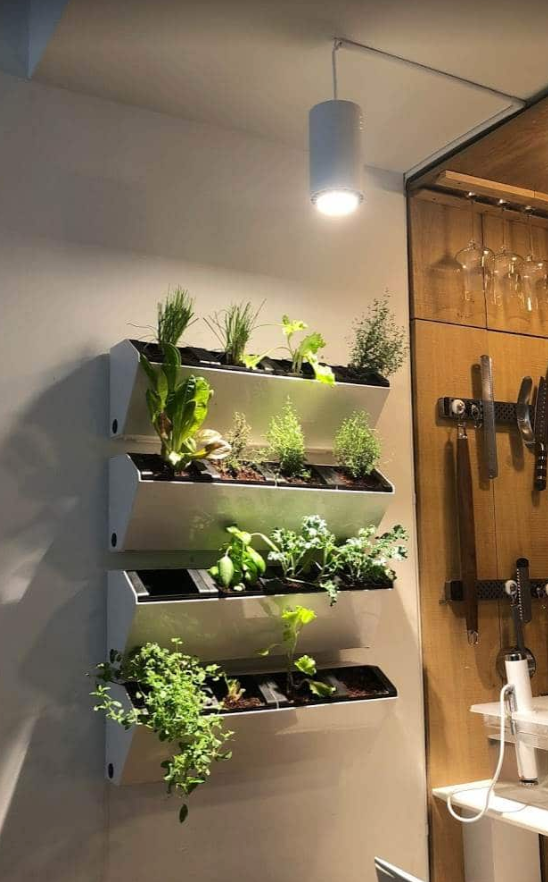 Soltech Solutions Grow Light over an Herb Garden

