


If your Monstera's new leaves keep coming in solid, round, and nothing like the dramatic split leaves you've seen on other people's plants, you're probably wondering what you're doing wrong. Likely nothing. Leaf splitting, technically called fenestration, depends on a handful of specific conditions coming together, and when even one of them isn't quite right yet, your Monstera will keep producing solid leaves until it is.
This post walks through the six most common reasons fenestration stalls and what actually helps, so you know what to check before assuming something is wrong.
TL;DR: Why Your Monstera's Leaves Aren't Splitting
It might just be too young. Fenestration is a trait mature Monsteras develop, not something every leaf does.
A recently propagated plant pauses leaf development while it focuses on growing roots.
Low light is the most common cause, and usually the easiest one to fix.
A Monstera with nothing to climb tends to stay smaller and less fenestrated.
Missing nutrients can slow leaf development even when light looks fine.
Inconsistent watering stresses the plant in ways that show up in leaf size and shape.
Quick Reference: Causes and Fixes at a Glance
Here's a quick-scan version of all six causes before we get into each one.
| Cause | Sign to Look For | Fix |
|---|---|---|
| Still too young | Plant is small or under 1-2 years old | Keep up consistent care and give it time to mature |
| Recently propagated | New leaves are small or slow to appear after propagation | Let it focus on rooting first, new growth follows |
| Not enough light | Leaves stay small, solid, or pale over several growth cycles | Move to brighter indirect light or add a grow light |
| Nothing to climb | Plant trails or sprawls instead of climbing | Add a moss pole or stake and train the vine onto it |
| Missing nutrients | Slow growth despite good light and watering | Feed with a balanced fertilizer during the growing season |
| Inconsistent watering | Wilting, drooping, or erratic new growth | Water when the top 1-2 inches of soil are dry |
Is It Normal for a Monstera's Leaves Not to Split?
Yes, and it's worth understanding why before troubleshooting anything else. Fenestration isn't something a Monstera does automatically from its very first leaf. It's a trait that shows up as the plant matures.
A study from the University of South Florida found that the holes in a Monstera's leaves form through a process called programmed cell death, and only once the plant reaches its adult growth stage. In plain terms, the plant is wired to grow solid leaves first and add holes later, not the other way around.
The same study found something else worth knowing: those holes likely evolved to help rainwater reach the plant's roots more efficiently as it climbs through a rainforest canopy, not to protect the leaves from wind damage the way many people assume.
Every plant works through this maturing process leaf by leaf, so a young or newly established Monstera producing solid leaves right now isn't doing anything wrong. It just hasn't gotten there yet.
Why Are My Monstera's Leaves Not Splitting? 6 Common Causes
1. Your Monstera Is Still Too Young
According to a Monstera deliciosa fact sheet from the University of Connecticut's Home & Garden Education Center, young leaves lack the deep splits and holes that give mature Monsteras their signature look. Those features develop as the plant ages, with mature leaves eventually reaching up to three feet wide.
If your plant is still relatively small or has only been in your home a year or two, the most likely explanation is simply time. Keep up the same consistent care and let it keep growing. There's no way to rush a plant into maturity, but every new leaf is a small step closer.
2. It Was Recently Propagated
If your Monstera started life as a cutting, it's normal for growth to look slow at first. Extension horticulturists at the University of Minnesota note that a newly propagated cutting can take two to three months just to produce its first new leaf, since the plant is focused on establishing roots before it puts energy into new growth.
Even once a propagated plant starts producing leaves again, the first few are often smaller and less fenestrated than what it will eventually grow. That's a normal part of the plant re-establishing itself, not a sign of a problem.
3. It's Not Getting Enough Light
Light is what fuels a plant's growth, and it's the most common reason a mature, established Monstera keeps producing small, solid leaves instead of larger, fenestrated ones. Monstera is often marketed as a low-light plant because it can survive in dim rooms, but surviving and thriving are two different things. Without enough consistent, bright indirect light, a Monstera has less energy to put toward the more complex growth that fenestration requires.
If your plant is clearly past the young or recently propagated stage and its leaves are still coming in small and solid, light is the first thing worth checking.
This is where a grow light can make a real difference, especially in apartments or rooms without much direct sun. A design-forward option like the Aspect™ Gen 2 pendant sits above the plant and delivers consistent, sun-like light without looking like grow equipment, while the Vita™ Grow Bulb works well for smaller Monsteras on a shelf or side table.

An Aspect™ Gen 2 Pendant Grow Light is an excellent light for supporting your monstera's growth.
If you're not sure how much light your space is actually getting, our plant light calculator and guide to how much light a Monstera actually needs are both good places to start.
4. It Doesn't Have Anything to Climb
In the wild, Monstera seedlings actually grow toward the darkest part of the forest floor first, a behavior the University of Connecticut's fact sheet describes as negative phototropism. They're not avoiding light for its own sake, they're searching for a tree trunk to climb. Once a Monstera attaches itself to something and starts climbing, that same fact sheet notes leaf size increases drastically.
Indoors, that means a Monstera left to trail or sprawl without support often stays smaller and less fenestrated than one trained onto a moss pole or stake. If yours has been growing along the same shelf or windowsill for a while without anything to climb, giving it something to attach to is a simple, low-effort change that can make a real difference.
5. It's Missing Key Nutrients
Larger, more complex leaves take more energy to grow, and that energy has to come from somewhere beyond just light. A Monstera that isn't getting enough nutrients from its soil may hold off on producing mature, fenestrated leaves even when everything else looks fine.
A balanced, water-soluble houseplant fertilizer applied during the spring and summer growing months is usually enough. Most Monsteras don't need much feeding in fall and winter, when growth naturally slows down.
6. Watering Is Inconsistent
Overwatering and underwatering both stress a plant's roots, and root stress tends to show up later as smaller or slower leaf growth. The same University of Minnesota Extension guidance on Monstera care recommends watering once the top one to two inches of soil have dried out, rather than sticking to a fixed schedule regardless of conditions.
Consistency matters more than perfection here. A Monstera that's watered on a somewhat irregular schedule but never left bone dry or sitting in soggy soil for long will generally do better than one on a rigid schedule that doesn't account for the season or the room.
How Long Does It Take for a Monstera to Start Splitting?
There's no single timeline that applies to every Monstera, since it depends on the plant's age when you got it, how much light it's getting, and how established its roots are. In most homes, it takes a few years and several leaves of steady growth before splits reliably start to appear.
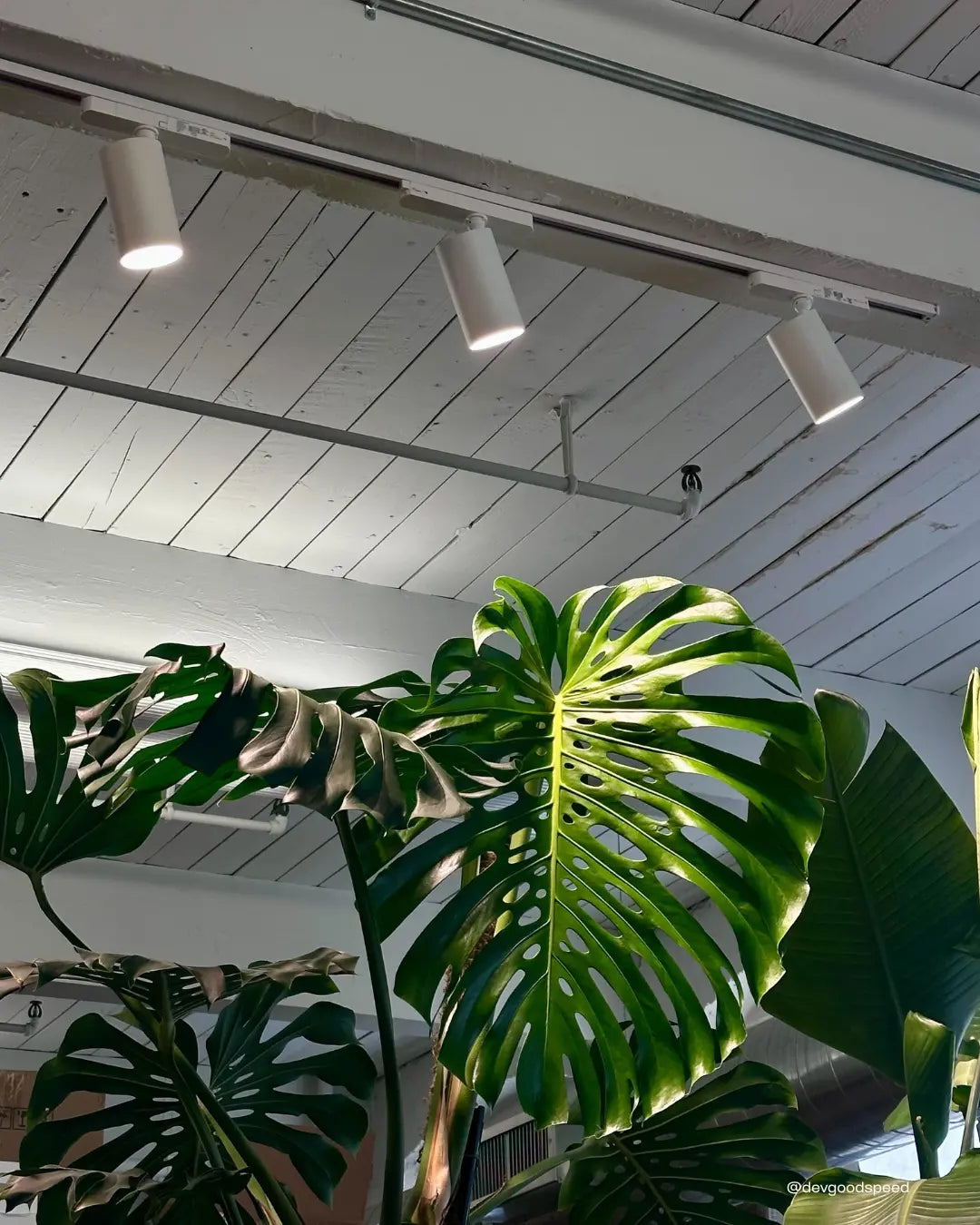
Dramatic fenestrations are more likely on large, mature plants than newly propagated or smaller plants.
A Monstera bought as a small starter plant may take longer than one that arrived already partway to maturity. If your plant is healthy, growing new leaves, and getting good light, it's usually just a matter of time rather than something that needs fixing.
How to Help Your Monstera Grow Bigger, More Fenestrated Leaves
-
Give it something to climb, like a moss pole or stake, and gently train new growth onto it.
-
Keep it in bright, indirect light, and consider a grow light if natural light isn't reliable in your space.
-
Feed it a balanced fertilizer during the spring and summer growing season.
-
Water when the top one to two inches of soil are dry, rather than on a fixed schedule.
-
Be patient with young or recently propagated plants. Consistent care now pays off in future leaves.
The Bottom Line
A Monstera that isn't splitting yet almost never means something is wrong. It usually just means one or two conditions, like light, maturity, or something to climb, haven't quite lined up yet. Work through the list above, give your plant a little time, and those dramatic split leaves will come.


